Stay Healthy
Health is wealth. Good health leads to happiness. It also plays an important role in economic growth, as healthy populations live longer, are more productive, and save more.
How many calories should you eat? 
To maintain good health, you need to balance the amount of calories you consume through food with the amount of calories you burn through physical activity.
Man
- Around 2,500 kcal a day
Woman
- Around 2,000 kcal a day
Kid (from 7 to 10 years old)
- Around 1,500 to 2,000 kcal a day
The amount of energy you need will depend on:
- your age – E.g. growing children and teenagers may need more energy
- your lifestyle – E.g. how active you are
- your size – your height and weight can affect how quickly you use energy
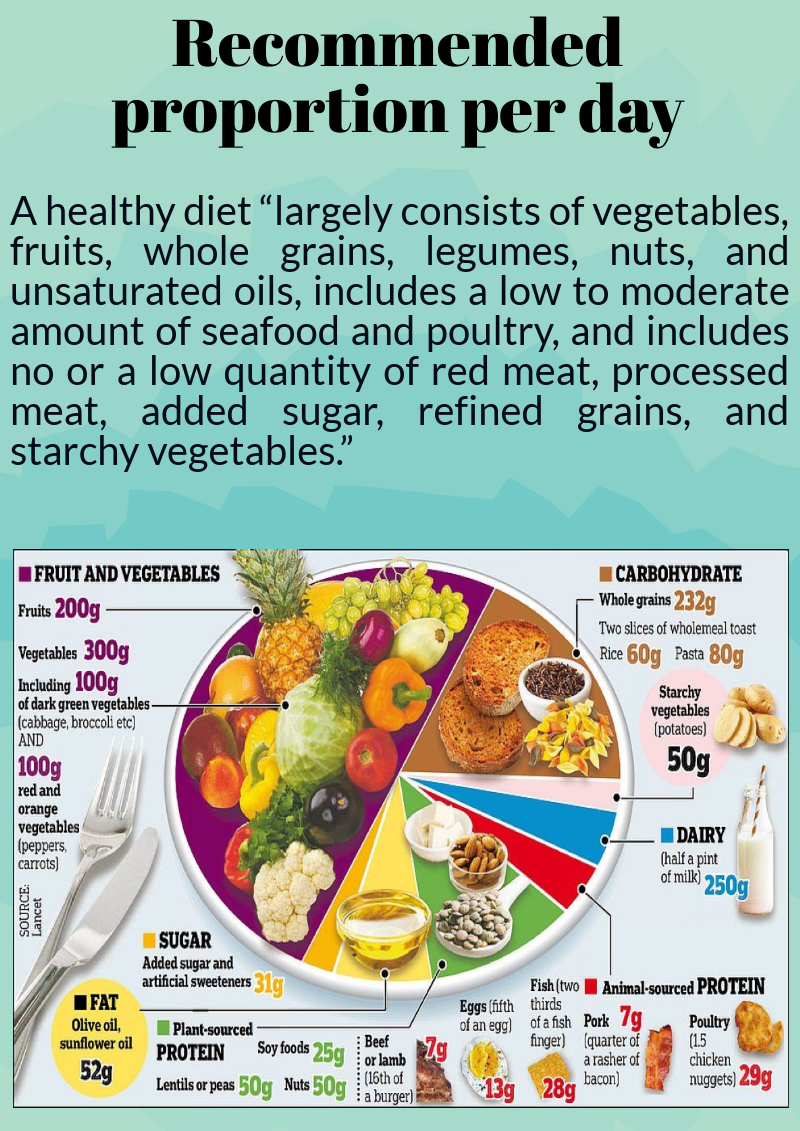
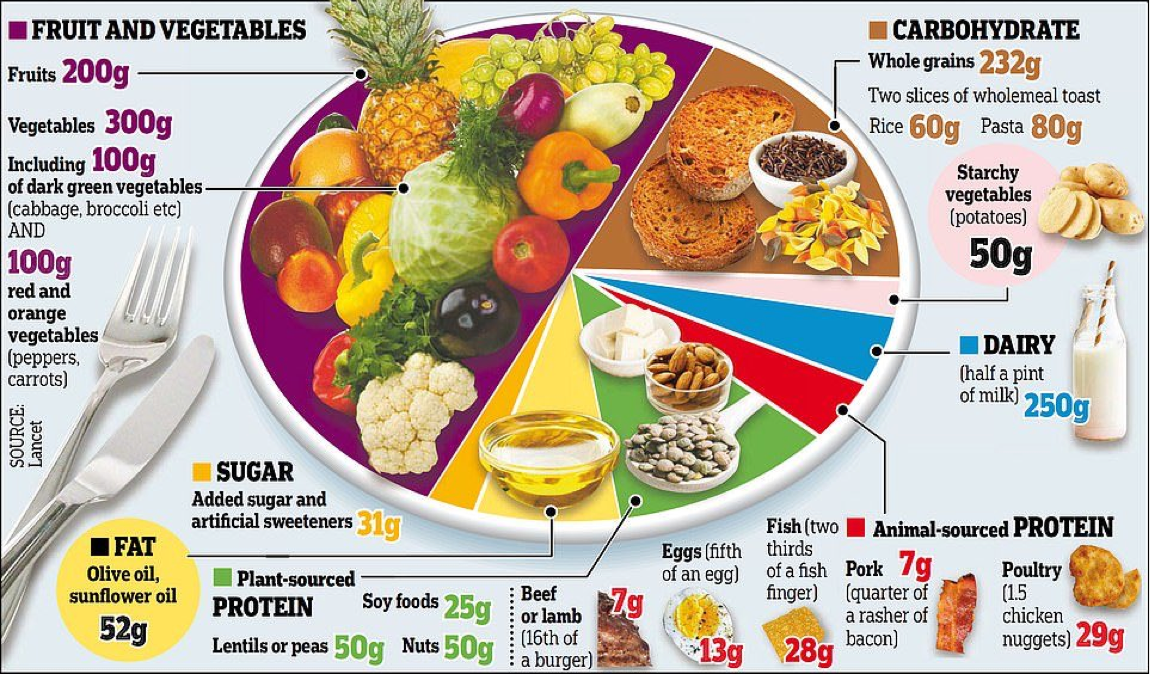
Recommended proportion per day 
A healthy diet “largely consists of vegetables, fruits, whole grains, legumes, nuts, and unsaturated oils, includes a low to moderate amount of seafood and poultry, and includes no or a low quantity of red meat, processed meat, added sugar, refined grains, and starchy vegetables.”
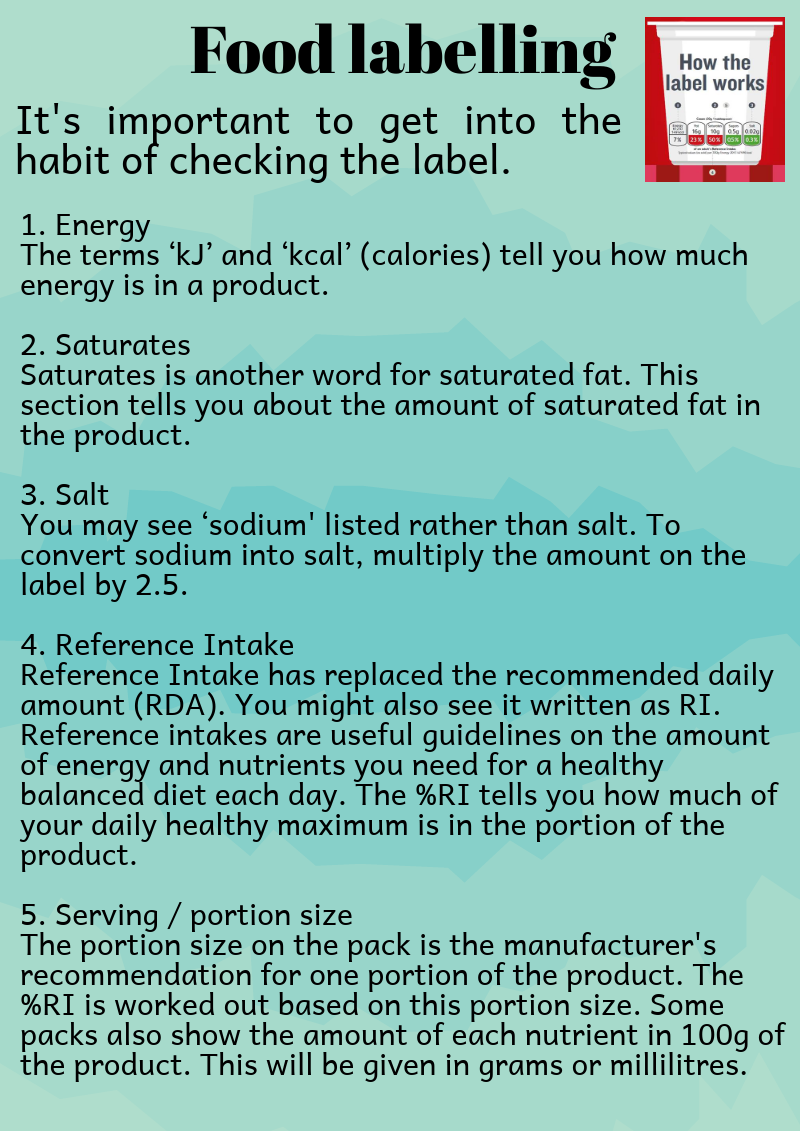
Food labelling 
It’s important to get into the habit of checking the label.
1. Energy
The terms ‘kJ’ and ‘kcal’ (calories) tell you how much energy is in a product.
2. Saturates
Saturates is another word for saturated fat. This section tells you about the amount of saturated fat in the product.
3. Salt
You may see ‘sodium’ listed rather than salt. To convert sodium into salt, multiply the amount on the label by 2.5.
4. Reference Intake
Reference Intake has replaced the recommended daily amount(RDA). You might also see it written as RI. Reference intakes are useful guidelines on the amount of energy and nutrients you need for a healthy balanced diet each day. The %RI tells you how much of your daily healthy maximum is in the portion of the product.
5. Serving / portion size
The portion size on the pack is the manufacturer’s recommendation for one portion of the product. The %RI is worked out based on this portion size. Some packs also show the amount of each nutrient in 100g of the product. This will be given in grams or millilitres.
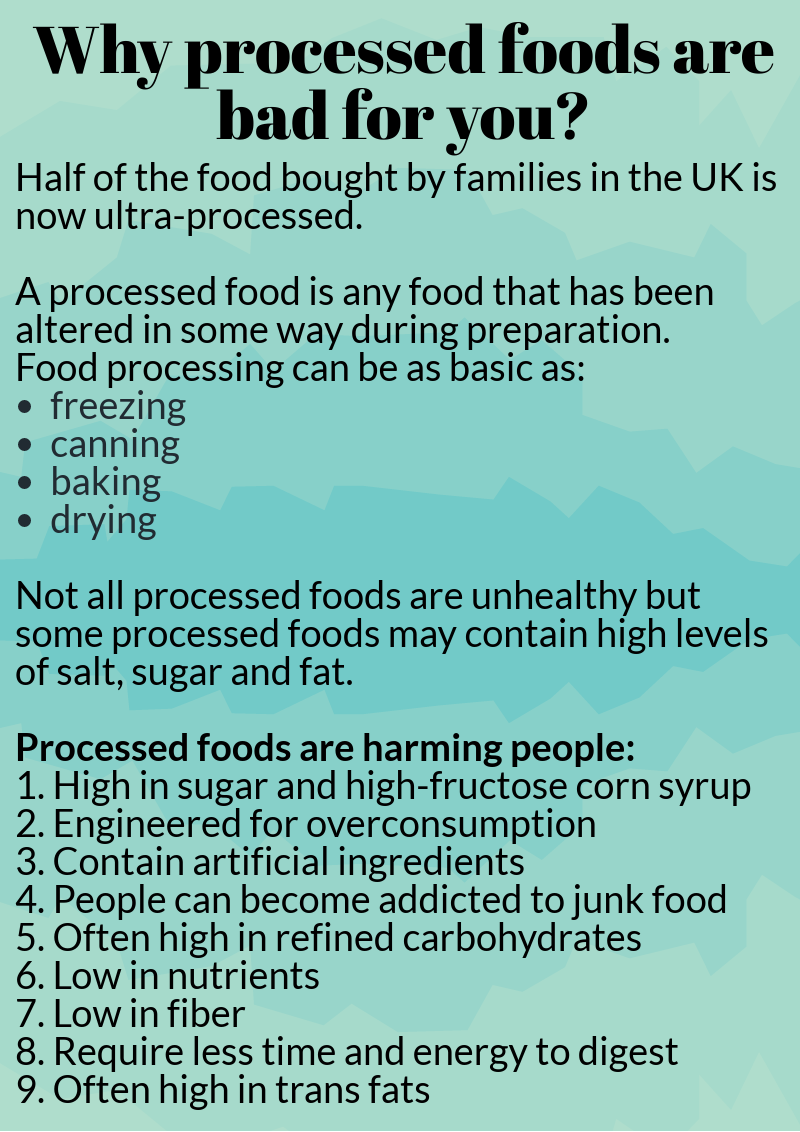
Why are processed foods bad for you? 
Half of all the food bought by families in the UK is now ultra-processed.
A processed food is any food that has been altered in some way during preparation. Today, ‘processed’ generally means chemically processed, using cheap, often artificial ingredients that hold almost no nutritional value and ’empty’ calories.
Not all processed foods are unhealthy but some processed foods may contain high levels of salt, sugar and fat.
Processed foods are harming people:
1. High in sugar and high-fructose corn syrup
2. Engineered for overconsumption
3. Contain artificial ingredients
4. People can become addicted to junk food
5. Often high in refined carbohydrates
6. Low in nutrients
7. Low in fiber
8. Require less time and energy to digest
9. Often high in trans fats
Alternative diets 
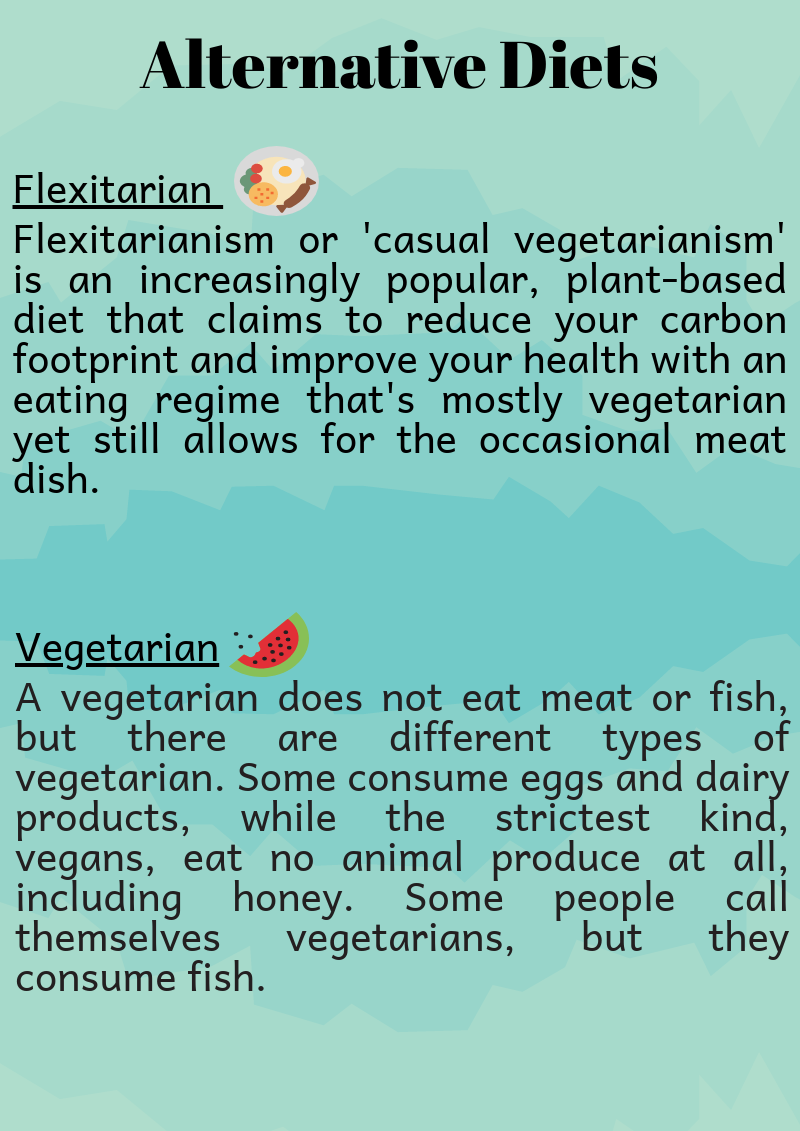
Flexitarian 
Flexitarianism is an increasingly popular, plant-based diet that claims to reduce your carbon footprint and improve your health with an eating regime that’s mostly vegetarian yet still allows for the occasional meat dish.
Vegetarian 
There are different types of vegetarian. Some consume eggs and dairy products, while the strictest kind, vegans, eat no animal produce at all, including honey. Some people call themselves vegetarians, but they consume fish.
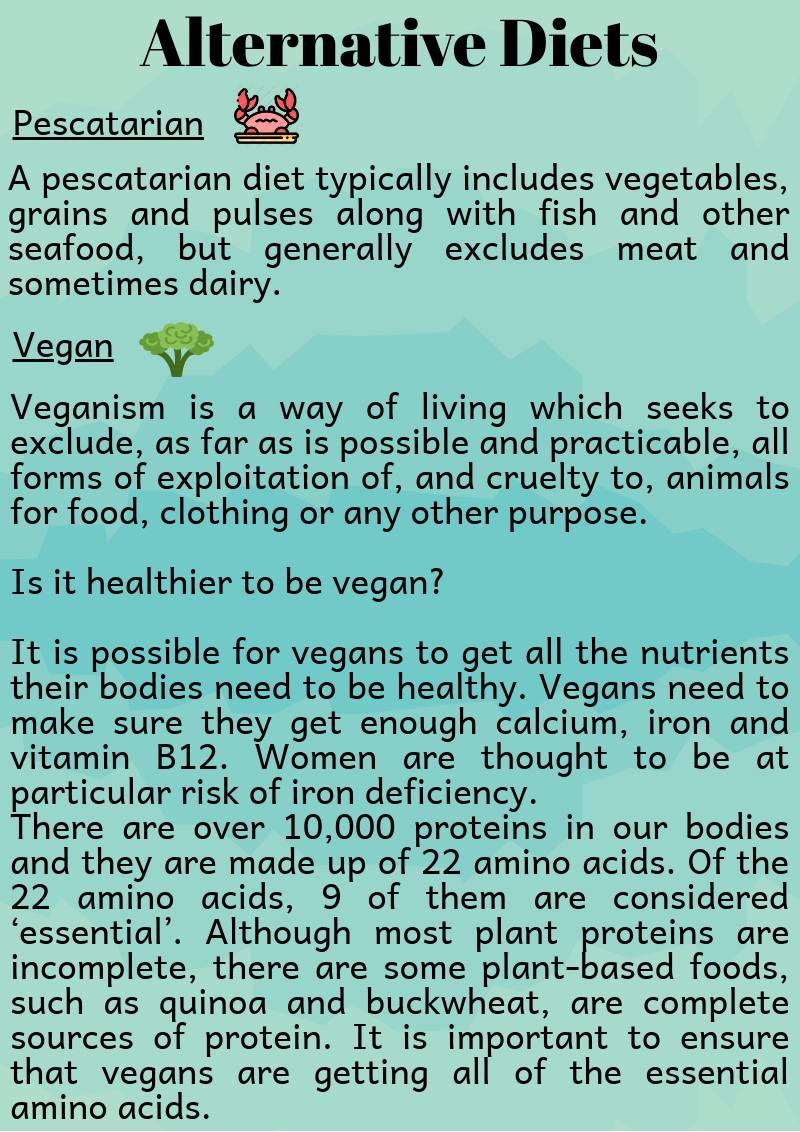
Pescatarian 
A pescatarian diet typically includes vegetables, grains and pulses along with fish and other seafood, but generally excludes meat and sometimes dairy.
Vegan 
Veganism is a way of living which seeks to exclude, as far as is possible and practicable, all forms of exploitation of, and cruelty to, animals for food, clothing or any other purpose.
Is it healthier to be vegan?
It is possible for vegans to get all the nutrients their bodies need to be healthy. Vegans need to make sure they get enough calcium, iron and vitamin B12. Women are thought to be at particular risk of iron deficiency.
There are over 10,000 proteins in our bodies and they are made up of 22 amino acids. Of the 22 amino acids, 9 of them are considered ‘essential’. Although most plant proteins are incomplete, there are some plant-based foods, such as quinoa and buckwheat, are complete sources of protein. It is important to ensure that vegans are getting all of the essential amino acids.