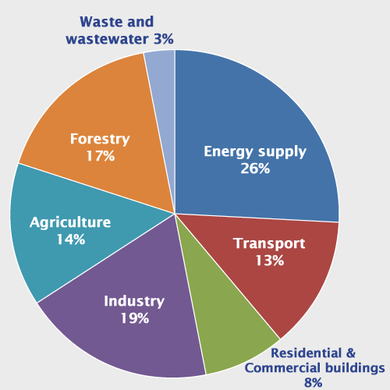
Farming has a big impact on the environment; it is now responsible for at least 13% of all greenhouse gas emissions (close to that of transport), as well as many other harmful environmental effects, the basics of most of which you can learn below.
Although most of us can’t just switch to a more sustainable diet overnight, it is good to be aware of the facts and the need for mass change to save our planet so that we can begin make mindful choices about what we buy and eat.
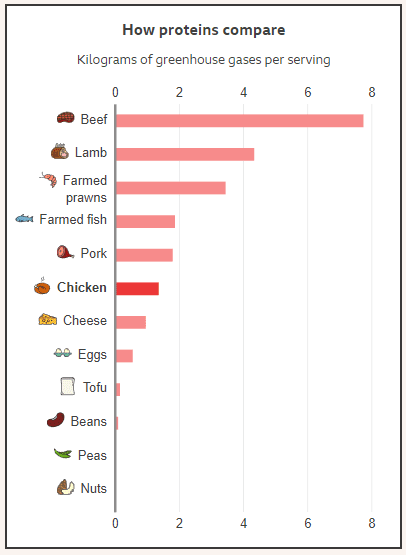
Where we get our protein from has a big environmental impact: this table, as a starter, shows the greenhouse emissions of popular types of proteins, from animal to plant sources.
Greenhouse gas emissions
At least 13% of all emissions come from animal agriculture (13.8% according to the World Resources Institute https://www.wri.org/ )
Emissions are affected by:
Deforestation to make room for animals to graze. Trees also take carbon out of the atmosphere, deforestation then creating a two-fold increase of emissions.
Gas and manure: what comes out of the other end of cows, methane, is a very potent greenhouse gas (agriculture being responsible for around 37% of these emissions), while manure adds to levels of nitrous oxide in the atmosphere.
Beef and lamb are the animals whose rearing causes the highest levels of emissions. To eat more sustainable, these are the best meats to avoid.
Water use
Growing population and depletion of underground, accessible water stores means that water availability is becoming a big global issue. We may take water for granted now, but we may not later. Here are some quick facts about water use and animal agriculture:

Waste from farming, particularly un-organic farming, pollutes water ways, contributing, for example, to ‘dead zones’ where life becomes impossible
70% of liquid freshwater use is from animal agriculture. That’s compared to only 8% human daily use, through drinking, washing and cooking.*
For example, one quarter-pounder burger uses up about 1650l of water. Daily personal water use comes to about 150l.
Land use
Animals take up a lot more space than plants. Animal product consumption has risen massively with mass farming that making these products cheap.
It’s not only where animals live, it’s what they eat, which encapsulates all three of the problems of land, water and greenhouse gas emissions. The plants they eat must also have a lot of land to grow. On a plant-based diet, plants can go directly into human bodies, rather than through animals first, minimising land use, water consumption and greenhouse emissions.
References:
Netflix’s ‘Explained: The World’s Water Crisis’

